


Nine AI technologies are moving from pilot to production in gambling, and the pressure is already visible inside operator workflows. A compliance manager can be asked to justify an account restriction while the same AI stack is drafting promotions, screening transactions, and recommending next actions to frontline staff. That tension defines the current stage of the top emerging technologies in artificial intelligence for iGaming, where speed matters, but evidence, auditability, and regulatory control matter more.
Generative AI investment reached $33.9 billion in 2024, an 18.7% increase from 2023 and more than 8.5 times the 2022 level, according to the Stanford HAI AI Index economy report. Surveyed organizations reporting AI use in at least one business function rose from 55% in 2023 to 78% in 2024, while reported generative-AI use more than doubled from 33% to 71% in the same period, showing how quickly these tools moved into mainstream operations. At the same time, the compliance frame is tightening. The EU AI Act already sets staggered obligations that matter for synthetic content, general-purpose models, and high-risk deployments, while agentic systems are pushing AI beyond text generation into operational action.
The practical question for operators, suppliers, and compliance leads is no longer whether AI will be used. It is where each technology sits in the workflow, who can approve its actions, what evidence it leaves behind, and which obligations apply when something goes wrong.
Table of Contents
- 1. Generative AI and Large Language Models
- 2. Agentic AI
- 3. AI-Driven Player Protection and Responsible Gambling Analytics
- 4. Predictive Personalisation and Recommendation Engines
- 5. AI-Powered Fraud Detection and AML Monitoring
- 6. Computer Vision for Live Casino and Land-Based Surveillance
- 7. AI-Assisted Sports Odds Compilation and Trading
- 8. Generative AI for Game Content Creation
- 9. Explainable AI and AI Governance Frameworks
- Top 9 Emerging AI Technologies: Comparison Matrix
- From Pilot Projects to Accountable AI Operations
1. Generative AI and Large Language Models
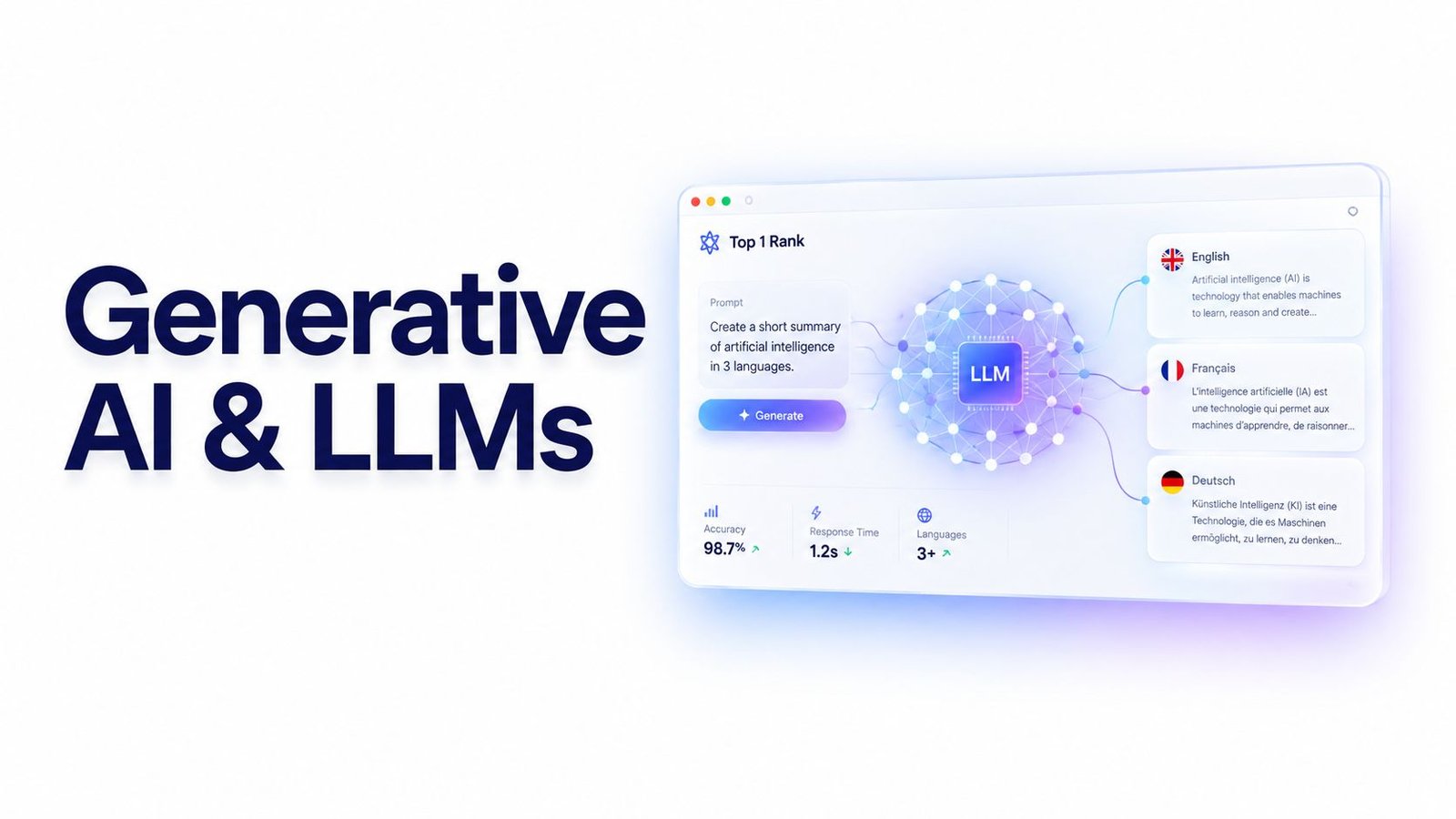
Generative AI is now the default entry point for most gaming businesses because it handles the work that scales badly with humans. The clearest use cases sit in player support, multilingual marketing, compliance review, and internal knowledge retrieval, all areas where iGaming teams spend time repeating the same answers across markets. The Stanford AI Index economy report shows why this layer has become commercially serious, not experimental, because global private investment in generative AI reached $33.9 billion in 2024 and accounted for over 20% of all private AI investment, while business adoption jumped sharply across functions (Stanford HAI AI Index economy report).
That scale is exactly why the trade-off matters. A chatbot that drafts support replies can reduce response pressure, but it can also invent policy language if it is left to improvise from open-ended prompts. An AI writing assistant can localize a sportsbook promo across several languages, but it can also miss jurisdiction-specific bonus restrictions unless legal and responsible gambling teams review the final copy.
Where operators use it and where they should not
In casino and sportsbook operations, the strongest pattern is first-line assistance with human escalation. An AI support agent can summarize a player issue, surface the right help article, and route the case to a trained staff member when the request involves account changes, payments, complaints, or self-exclusion. Compliance teams can also use LLM-based tools to map obligations across jurisdictions, but the legal sign-off still needs to stay with people who understand the market.
Practical rule: Restrict models to approved knowledge sources, log every response for audit, and keep identifiable player data out of external models unless contracts and data processing agreements clearly cover it.
The business case is obvious. The governance burden is also obvious. Generative AI belongs in workflows where drafting, summarising, translation, and retrieval are useful, but it should stay away from unsupervised decisions that affect bonuses, access, or harm-related interventions.
2. Agentic AI
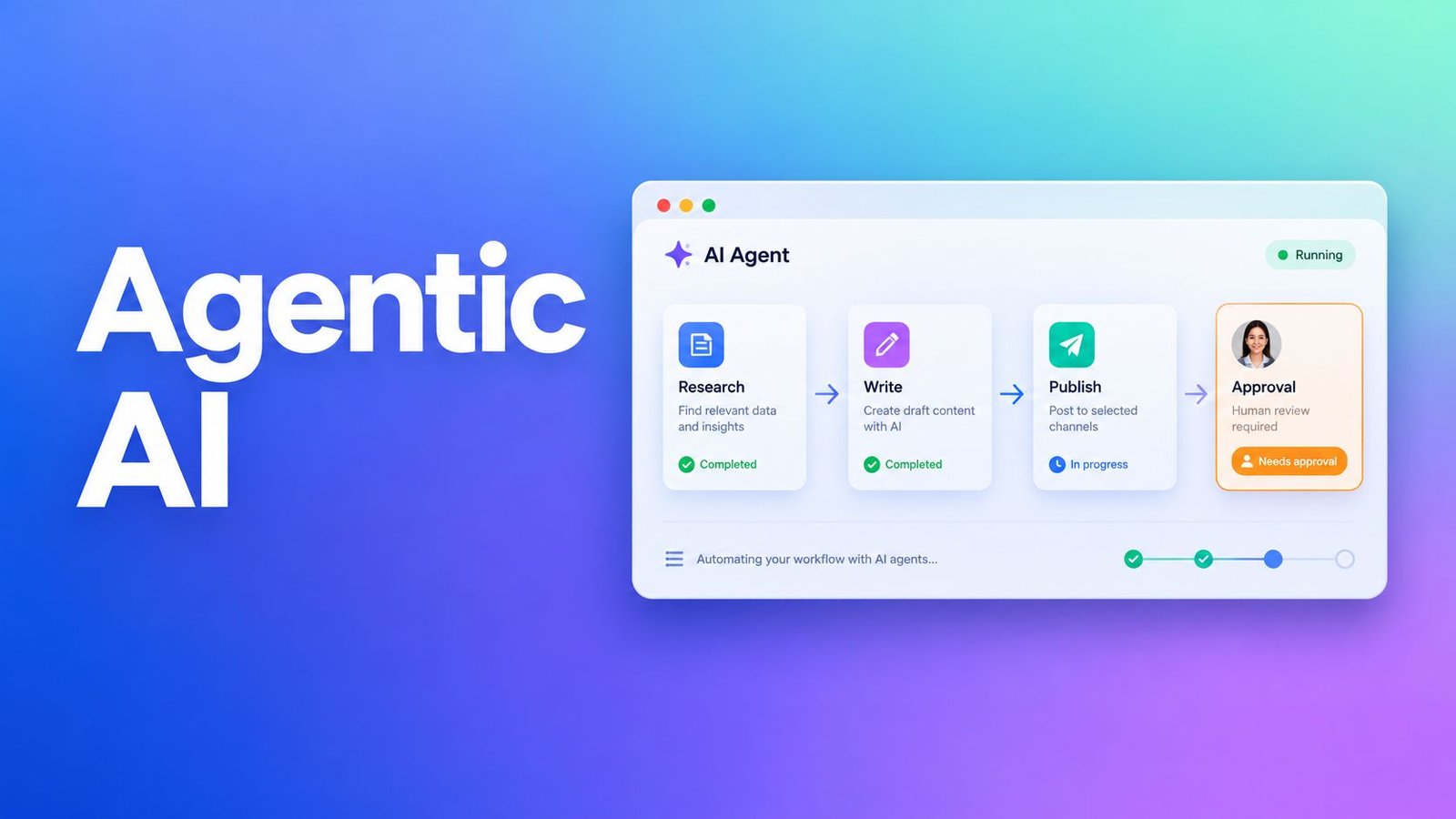
Agentic AI shifts the discussion from content generation to delegated action. These systems are designed to plan tasks, call software tools, retrieve information, and execute multistep workflows with limited human intervention, which makes them far more sensitive than a standard chatbot. The 2025 KPMG global tech report says 23% of respondents were already scaling an agentic-AI system in at least one business function, while 39% had started experimenting with AI agents, and broader AI use had reached 88% of respondents in regular business functions (KPMG global tech report).
That adoption pattern matters because the value is not just efficiency. Agentic systems can move work through onboarding checks, payment reconciliation, affiliate reporting, and KYC triage. They also create a new class of operational risk, because an agent that can click, query, file, or route can also act outside intent if permissions, prompts, or source data are wrong.
The control question comes before the autonomy question
An operator does not need full autonomy to get value. A read-only agent that prepares a case file for KYC review can save time without taking the final decision. An affiliate operations agent can compile performance data and flag anomalies without being allowed to change payout logic. The strongest early deployments keep the agent close to analysis and far from irreversible action.
Final decisions on payouts, account closures, and self-exclusion should remain with trained staff until the audit trail, escalation path, and red-team testing are strong enough to support automation.
The EU AI Act also matters here because agents are covered even without a separate legal category. The European Commission says the Act's definitions of an AI system and a general-purpose AI model are sufficient to cover agents, which means autonomy does not remove accountability. That makes agentic AI a governance technology as much as an automation technology, especially in regulated gambling where action traceability matters as much as speed.
3. AI-Driven Player Protection and Responsible Gambling Analytics
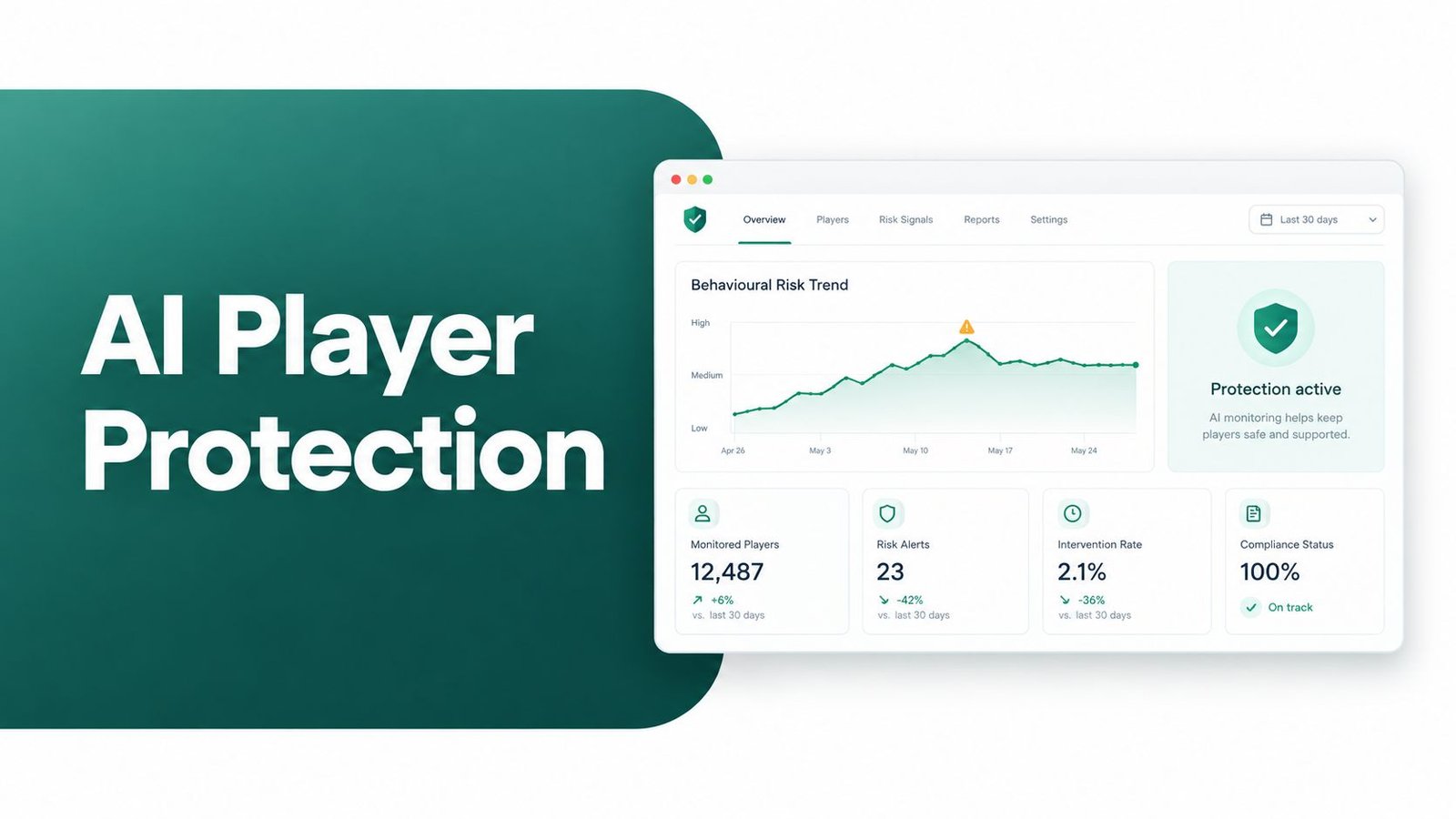
Player protection is one of the most important practical uses of AI in iGaming because manual monitoring does not scale cleanly across large customer bases. Behavioural analytics models can identify patterns linked to harm, including rapid stake escalation, long sessions, chasing losses, and changes in deposit behaviour. The output is usually a risk score or alert that prompts an intervention, such as a message, a limit prompt, a cool-off recommendation, or referral to support services.
The business value is not hard to see. The hard part is proving that the model finds genuine risk instead of just high spend. A system that over-flags can frustrate safe customers and bury RG teams in noise. A system that under-flags can miss real harm and expose the operator to regulatory scrutiny.
Detection accuracy must be tested against harm, not spend alone
UK-facing operators already understand this tension because behavioural models often sit alongside affordability checks and the customer interaction expectations in the Gambling Commission's regime. The same logic applies elsewhere, even where the rulebook looks different. The point is to tie detection to outcomes, not only to deposits, velocity, or turnover.
- Validate against real harm indicators: Use actual intervention outcomes, not just spend thresholds, to measure whether the model is useful.
- Keep humans in the loop for severe flags: High-severity alerts should go to a responsible gambling team, not a fully automated path.
- Document the logic: Regulators and internal audit teams need to see thresholds, overrides, and escalation rules.
- Connect prompts to support routes: A risk message that ends nowhere is weak control, not protection.
Operators looking at this area should also notice how much depends on evidence. A model can be complex and still fail if the team cannot explain why it fired. In player protection, explainability is not cosmetic, it is operational.
4. Predictive Personalisation and Recommendation Engines
Personalisation engines sit close to revenue, which makes them one of the most commercially sensitive AI technologies in the sector. They rank games, bonuses, navigation elements, and promotional offers based on historic behaviour, session context, and lifecycle stage. In practice, that means the lobby a player sees, the bet-builder widgets highlighted in a sportsbook, and the cross-sell path between casino and sportsbook can all be shaped by machine learning.
The upside is obvious. Players see content that feels more relevant, and operators can reduce friction in discovery. The risk is equally clear, because the same ranking logic can encourage excessive engagement if it is tuned only for conversion or session depth. Personalisation in gambling is not the same as retail recommendation.
Relevance has to be measured against responsibility
Personalisation should be measured with responsible engagement metrics as well as commercial ones. If a model drives more opens, more clicks, and longer sessions but also pushes vulnerable or self-excluded customers toward offers, it is not a success. It is a control failure dressed up as optimisation.
Operators also need to review the rules around each market. Local bonus terms, advertising restrictions, and responsible gambling obligations can change what a system is allowed to show, even if the model thinks the content is relevant. Model drift is another real issue, because player behaviour and product mix change over time, and stale recommendations can degrade both performance and compliance.
The commercial logic is straightforward, but so is the duty of care. Personalisation in iGaming should increase relevance without narrowing the player's options into a pressure funnel. The best teams treat that boundary as design input, not as a later legal review.
For a useful operating context on acquisition economics and retention pressure, see this analysis of user acquisition cost dynamics.
5. AI-Powered Fraud Detection and AML Monitoring
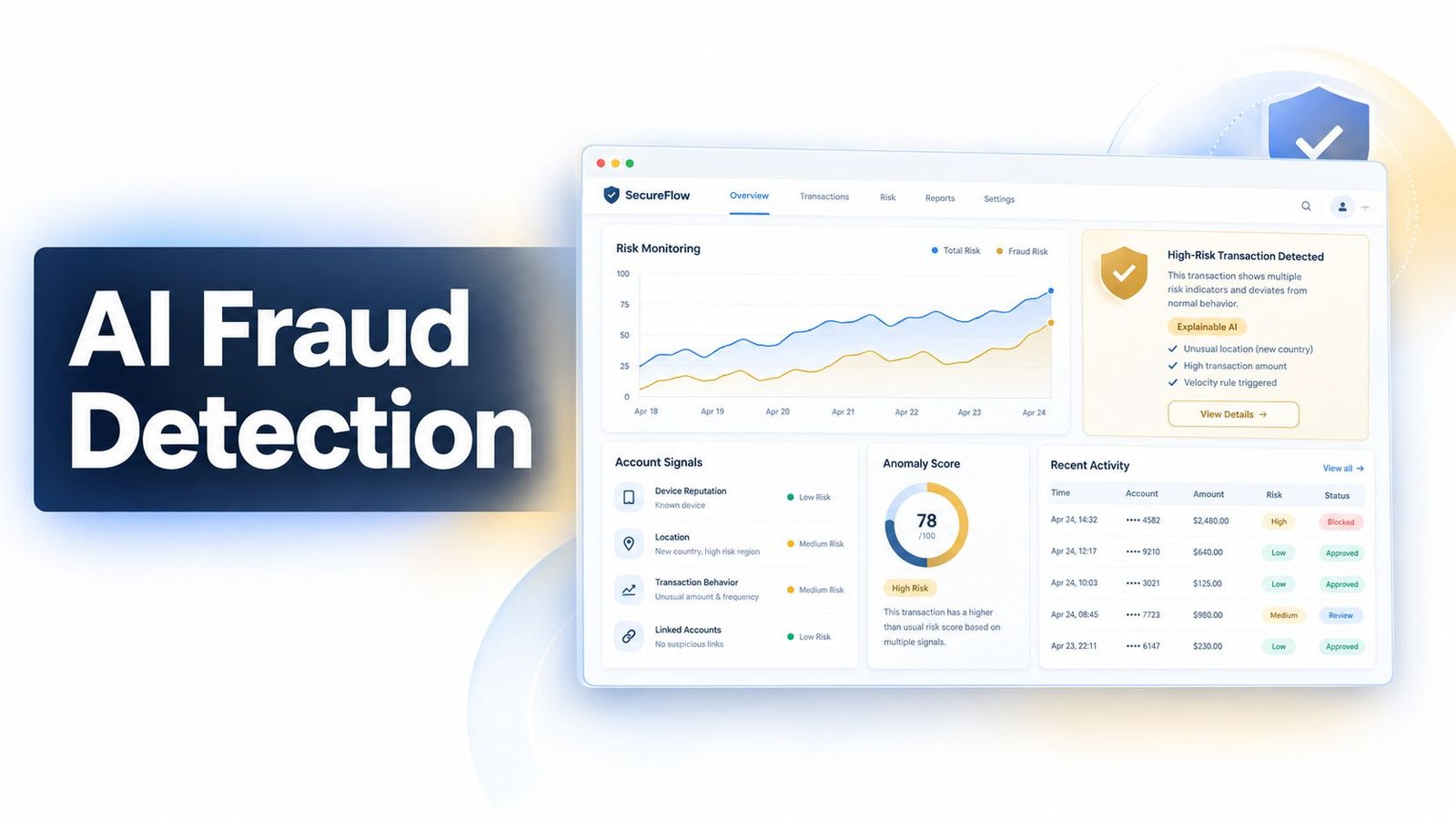
Fraud and AML monitoring is one of the clearest examples of AI moving from back-office support to frontline risk control. Machine learning systems analyse transactions, account behaviour, device signals, and network relationships to identify patterns that static rules often miss. That includes account takeover, bonus abuse, synthetic identities, and layering across payment paths.
This category matters because gaming operators handle high transaction volumes and fast-moving customer activity. A rules engine can spot obvious misuse, but it can also create too many false positives or miss coordinated behaviour that only becomes visible when data is linked across accounts and devices. AI helps because it adapts, but that flexibility also means compliance teams need tighter oversight of how the model behaves.
Fraud teams need explainability, not just scores
A machine learning alert is only useful when it connects to a documented procedure. If a model flags a suspicious account, the compliance team still needs to know what to review, what evidence to preserve, and when to escalate. That is why AI scores should sit beside transparent rules, not replace them.
- Track both error types separately: False positives and false negatives create different operational and regulatory risks.
- Tie alerts to AML procedures: Each alert should point to the relevant suspicious activity path or escalation step.
- Protect input quality: Manipulated or dirty data can make a model look smarter than it is.
- Review network links carefully: Shared devices, payment methods, or registration patterns can reveal coordinated abuse across multiple accounts.
For payment-acquisition and accreditation context, the PAGCOR payment gateway accreditation discussion is relevant to how operators think about payments, controls, and oversight in regulated markets.
The trade-off is simple. More sensitivity catches more bad activity, but it also slows legitimate customers if the thresholds are too tight. Better teams tune for explainable detection and fast investigation, not just for the highest possible hit rate.
6. Computer Vision for Live Casino and Land-Based Surveillance
Computer vision is the visual layer of AI, and in gambling it has a very different feel from text generation or recommendation models. It reads cards, detects roulette outcomes, tracks dealer actions, and supports surveillance in live casino and land-based environments. That makes it useful for result verification, quality assurance, crowd monitoring, and security workflows where human eyes alone are not enough.
The main appeal is consistency. A live studio can use computer vision to help verify outcomes in real time, while a land-based venue can use AI-assisted surveillance to flag unusual movement or access patterns. The main risk is also consistency, because a model that works on one table layout, camera angle, or lighting setup may not behave the same way elsewhere.
Accuracy depends on the room, not just the model
Computer vision needs calibration, manual backup, and strict retention rules. It should support the dealer and the security team, not replace them when a disputed result or access incident needs human review. Facial recognition and other biometric features also need a separate legal check, because privacy obligations vary sharply by jurisdiction.
The operational logic is straightforward. If the camera feed changes, the model should be tested again. If a result is disputed, there must be a manual verification path. If the regulator asks for logs, the venue should be able to produce them in a usable format.
For live-dealer deployment context, the live casino operations guide is a useful operational reference for how studios and platforms think about integrity and delivery.
That is why computer vision belongs on the list of emerging AI technologies, not as a novelty, but as a control layer. It makes live and physical gaming more auditable, but only if the venue treats calibration and records as part of the product.
7. AI-Assisted Sports Odds Compilation and Trading
Sports betting pricing is a real-time discipline, and AI is now embedded in how odds are compiled, adjusted, and managed. Statistical and machine learning models estimate event probabilities, generate prices, and react to market movement faster than manual trading alone can manage. Traders then use those outputs to manage exposure, limits, and margin across pre-match and in-play markets.
That matters because pricing accuracy is a direct commercial driver. It also matters because abnormal betting patterns can indicate manipulation, insider information, or other integrity issues. In other words, odds engines are not just pricing tools, they are part of the betting market's control fabric.
Speed helps, but governance has to hold
Sportsbooks should not let a model price in a vacuum. Automatic suspension rules need to trigger when data is late or an event changes in a way that breaks the underlying assumptions. Independent monitoring should check outputs against market prices, and the ownership of the model needs to be documented so traders know who can override it.
If the feed is stale, the price is stale. If the price is stale, the risk is not theoretical.
The best trading teams use AI to support judgement, not replace it. That is especially important when integrity bodies need to be notified of suspicious patterns under applicable rules. A model can assist with detection, but humans still have to decide how to respond.
For sports pricing and market context, the MPBL betting odds page is relevant because it reflects how odds-led content and trading data fit into a broader sportsbook environment.
The trade-off here is scale versus control. AI helps operators handle more markets with more speed, but only if the trading function keeps override authority, latency controls, and integrity coordination in place.
8. Generative AI for Game Content Creation
Game studios are using generative AI to accelerate concept art, narrative drafts, audio assets, animation prototypes, and localisation work. In iGaming, that can shorten production cycles for slots, table-game variants, and promotional assets, especially when studios manage large catalogues and multiple market versions. The technology is attractive because it can reduce early-stage creative bottlenecks.
The constraint is certification. A game that looks ready in a creative tool still has to pass mathematical testing, RNG review, intellectual property checks, and QA before it can ship in a regulated market. Generative AI speeds up production, but it doesn't reduce the standards a regulated game must meet.
Creative speed is not certification speed
Studios can use AI during pre-production for theme exploration and rough concepting, then hand the work over to human artists, designers, and compliance reviewers. Localisation teams can use AI-assisted translation for slot text or help content, but native-speaker review still matters when market-specific wording affects clarity or risk messaging.
Operators and suppliers should also verify tool licensing carefully. If a team uses a model-generated image, sound clip, or text fragment, the question is not just whether it looks good. It is whether the rights, provenance, and audit trail are defensible if a regulator, partner, or testing laboratory asks.
For accreditation context on studio workflows, the PAGCOR game content provider accreditation requirements provide relevant market framing.
Generative AI for game content creation sits near the creative front end, but the control environment must travel with it. Studios that treat AI output as draft material, not final product, are less likely to create certification problems later.
9. Explainable AI and AI Governance Frameworks
Explainable AI and governance frameworks are the layer that makes the rest of the stack defensible. XAI methods help humans understand why a model produced a certain output, through feature importance, decision summaries, and documentation. Governance frameworks define how systems are approved, monitored, reviewed, and retired. For iGaming, that matters because AI now shapes player treatment, account decisions, fraud actions, and marketing choices.
Technical capability meets board-level accountability. A model that influences access, affordability, or risk scoring must be explainable enough for internal review and, when needed, for regulators or courts. The European Union's AI Act reinforces that point with phased obligations. Prohibitions, core definitions, and AI-literacy requirements became applicable on 2 February 2025, obligations for general-purpose AI models and related governance arrangements began on 2 August 2025, and transparency requirements for certain synthetic-content systems are scheduled for 2 August 2026 (EU AI Act implementation timeline).
Governance is now a production discipline
AI governance works best when every system has a named owner, a risk tier, a model card, and an approval trail. That lets compliance teams ask the right questions before deployment instead of trying to reconstruct decisions after a complaint. It also helps operators distinguish low-risk drafting tools from systems that affect real customer outcomes.
The EU framework makes the distinction especially important for synthetic content. The act's transparency rules can affect systems that generate audio, images, video, or text, and certain systems already placed on the market before the relevant date get a later compliance window. For operators and suppliers, that means inventorying AI tools is no longer an IT housekeeping exercise. It is a regulatory readiness step.
For a practical summary of how the Act covers agents, the European Commission FAQ on the AI Act is the clearest public reference in the briefing set.
The trade-off is clear. Strong governance slows rollout. Weak governance creates hidden exposure. In regulated gambling, that is not a marginal difference.
Top 9 Emerging AI Technologies: Comparison Matrix
| Technology | Implementation Complexity | Resource Requirements | Expected Outcomes | Ideal Use Cases | Key Advantages |
|---|---|---|---|---|---|
| Generative AI and Large Language Models (LLMs) | Medium; requires integration, safeguards, and human review | Approved knowledge sources, APIs, data controls, reviewers | Faster support, research, and multilingual content production | Player support, localization, compliance research, marketing drafts | Scales language-dependent tasks and reduces response time |
| Agentic AI | High; requires workflow controls, permissions, and auditability | Tool and system integrations, action logs, human approval | Faster completion of multi-step operational tasks | KYC preparation, reconciliation, reporting, case routing | Automates workflows across multiple systems |
| AI-Driven Player Protection and Responsible Gambling Analytics | High; requires careful validation and governance | Behavioural data, risk models, dashboards, specialist review | Earlier identification of potential harm and targeted interventions | Player risk monitoring and safer-gambling outreach | Scales monitoring and supports timely intervention |
| Predictive Personalisation and Recommendation Engines | Medium to high; needs testing and ongoing tuning | Clean player data, recommendation models, experimentation tools | More relevant content and offers; potentially higher engagement | Lobby ranking, lifecycle campaigns, cross-product discovery | Improves content discovery and promotional efficiency |
| AI-Powered Fraud Detection and AML Monitoring | High; requires integration with payment, identity, and case systems | Transaction and device data, risk models, analyst capacity | Prioritized alerts and improved detection of suspicious activity | AML monitoring, account takeover, bonus abuse, multi-accounting | Adapts to changing fraud patterns and reduces manual review |
| Computer Vision for Live Casino and Land-Based Surveillance | High; requires site-specific setup and calibration | Cameras, video infrastructure, vision models, verification processes | More consistent game verification and faster incident review | Live game result checks, dealer procedure monitoring, surveillance | Adds auditability and speeds up event detection |
| AI-Assisted Sports Odds Compilation and Trading | High; requires low-latency data and risk controls | Reliable live feeds, pricing models, trading expertise, monitoring | Faster repricing and improved exposure management | Pre-match and in-play pricing, market monitoring | Expands market coverage and supports rapid price updates |
| Generative AI for Game Content Creation | Medium; requires QA, IP review, and certification controls | Generative tools, creative staff, testing and localization workflows | Faster prototyping and asset production | Concept art, audio, narrative text, localization | Speeds creative iteration and can lower production costs |
| Explainable AI (XAI) and AI Governance Frameworks | Medium to high; requires ongoing cross-functional oversight | Model documentation, monitoring tools, legal and compliance expertise | Clearer accountability, audit readiness, and issue detection | Governance of models affecting player treatment or account decisions | Improves transparency and supports review of automated decisions |
From Pilot Projects to Accountable AI Operations
The common thread across these nine technologies is that capability is rising faster than control. Generative AI has already become a mainstream business tool, agentic systems are moving from experiment to workflow execution, and player-protection models, fraud tools, and personalisation engines are now influencing real customer outcomes. The data behind that shift is clear. AI use is spreading across business functions, and the commercial centre of gravity is moving from “can it do the task?” to “can the operator prove it behaved properly?” (Stanford HAI AI Index economy report, KPMG global tech report).
Operators should start by mapping each AI use case to its workflow, data sources, and regulatory obligations. Then classify systems by risk and assign a named owner for every production model. Low-risk applications such as content drafting and internal research can move quickly if approved knowledge sources, review gates, and logging are in place. Higher-impact uses, including agentic workflows, player-protection analytics, and AML monitoring, should only expand once escalation paths, human review, and bias testing are live.
The EU AI Act raises the stakes because timing now matters as much as design. Synthetic content, general-purpose model governance, and transparency duties have phased deadlines, which means deployment plans need to match the calendar, not just the product roadmap. The same is true for live casino, surveillance, and sports trading. If the evidence trail is thin, the technology may be smart, but the operation is still exposed.
The most competitive operators will not be the ones that deploy the most autonomous tools the fastest. They will be the ones that can show where each model sits, who approved it, what it can do, and how the business would explain its actions after a failure.
For operators, suppliers, and compliance leads, the next step is clear. Audit every AI workflow now, separate draft-level automation from customer-impacting decisions, and build a governance register that can survive a regulator's question on an ordinary Tuesday.





Join thousands of gaming professionals receiving the latest iGaming news, regulatory updates, and market insights.
